


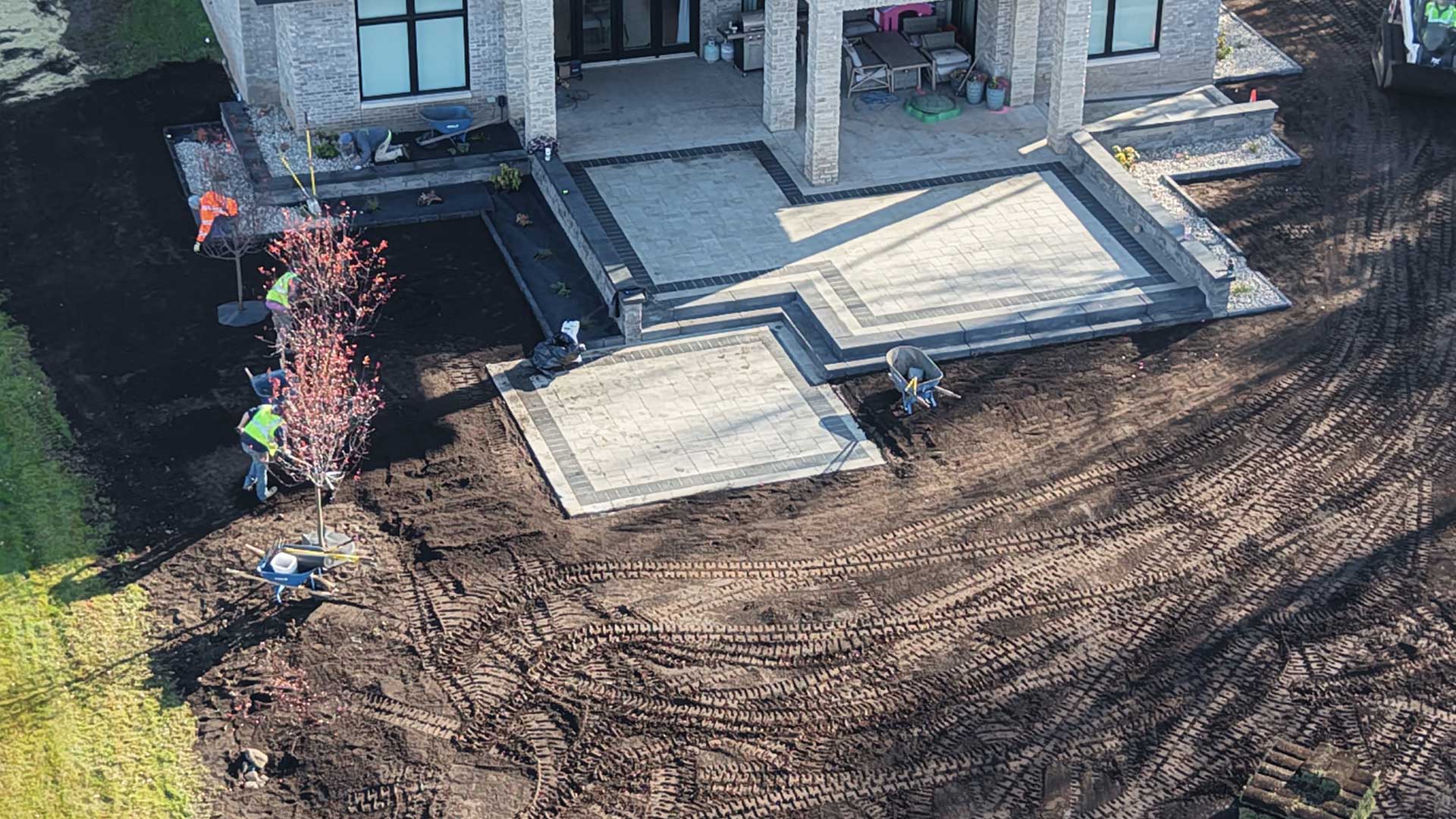
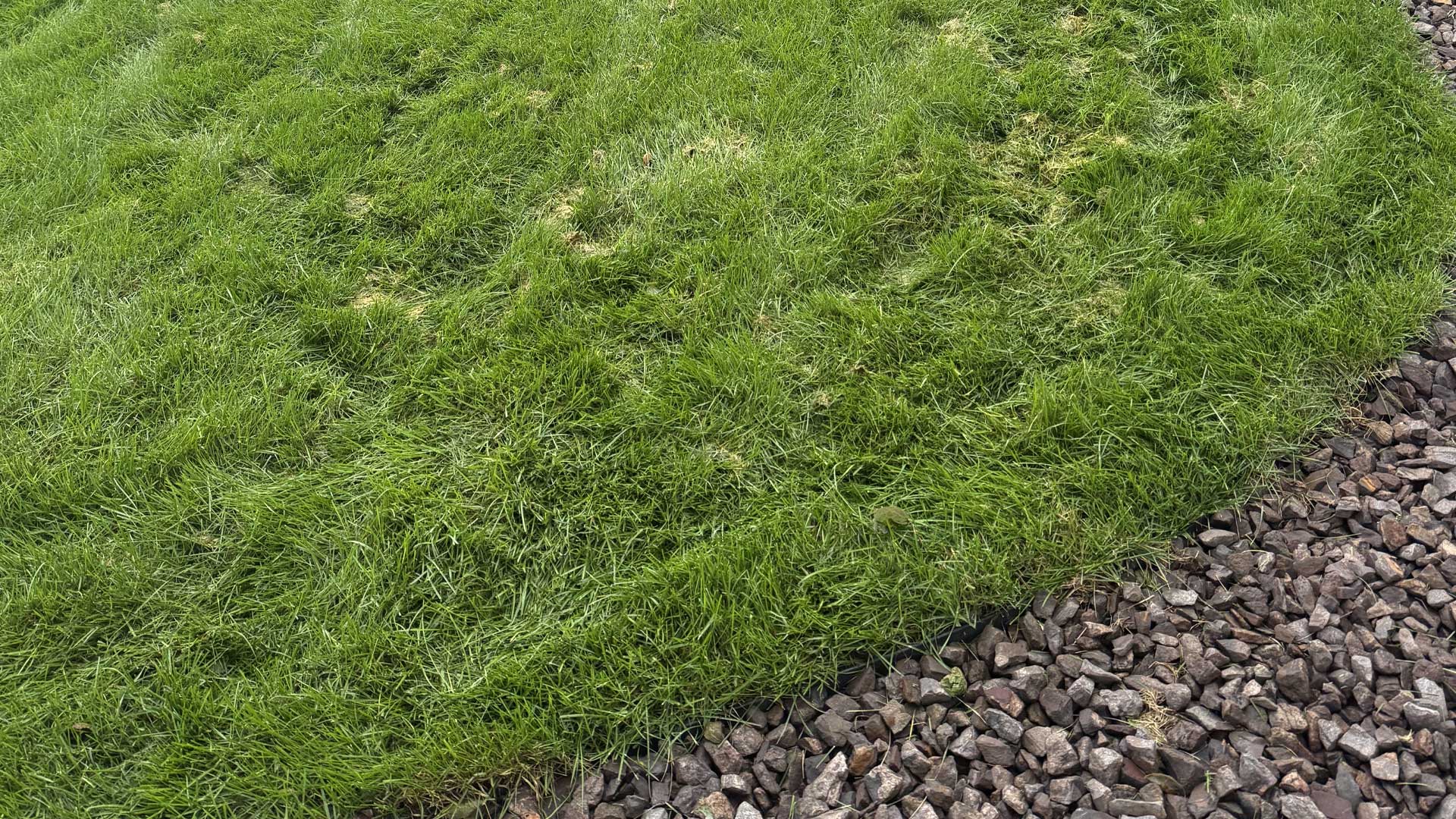
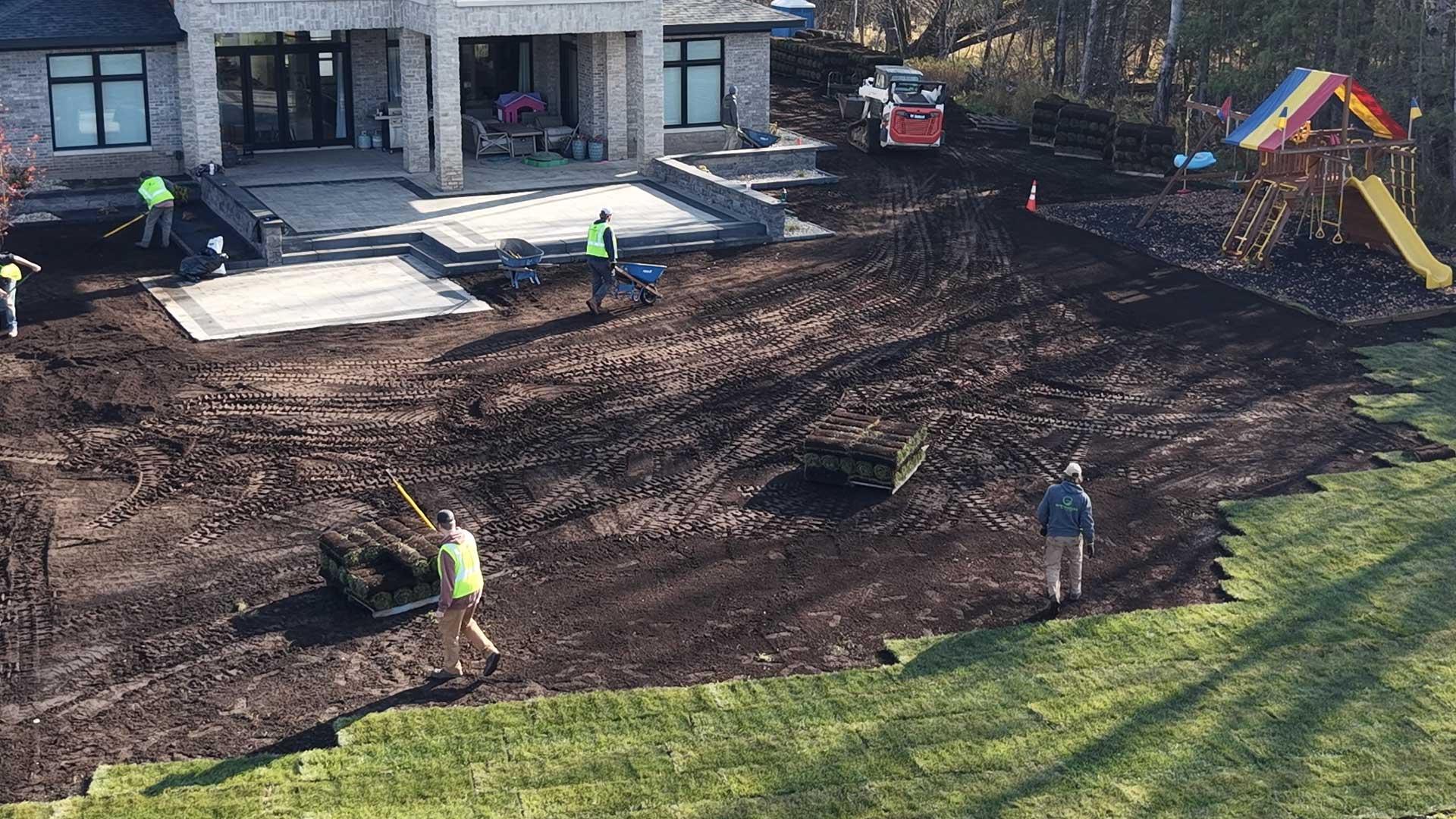
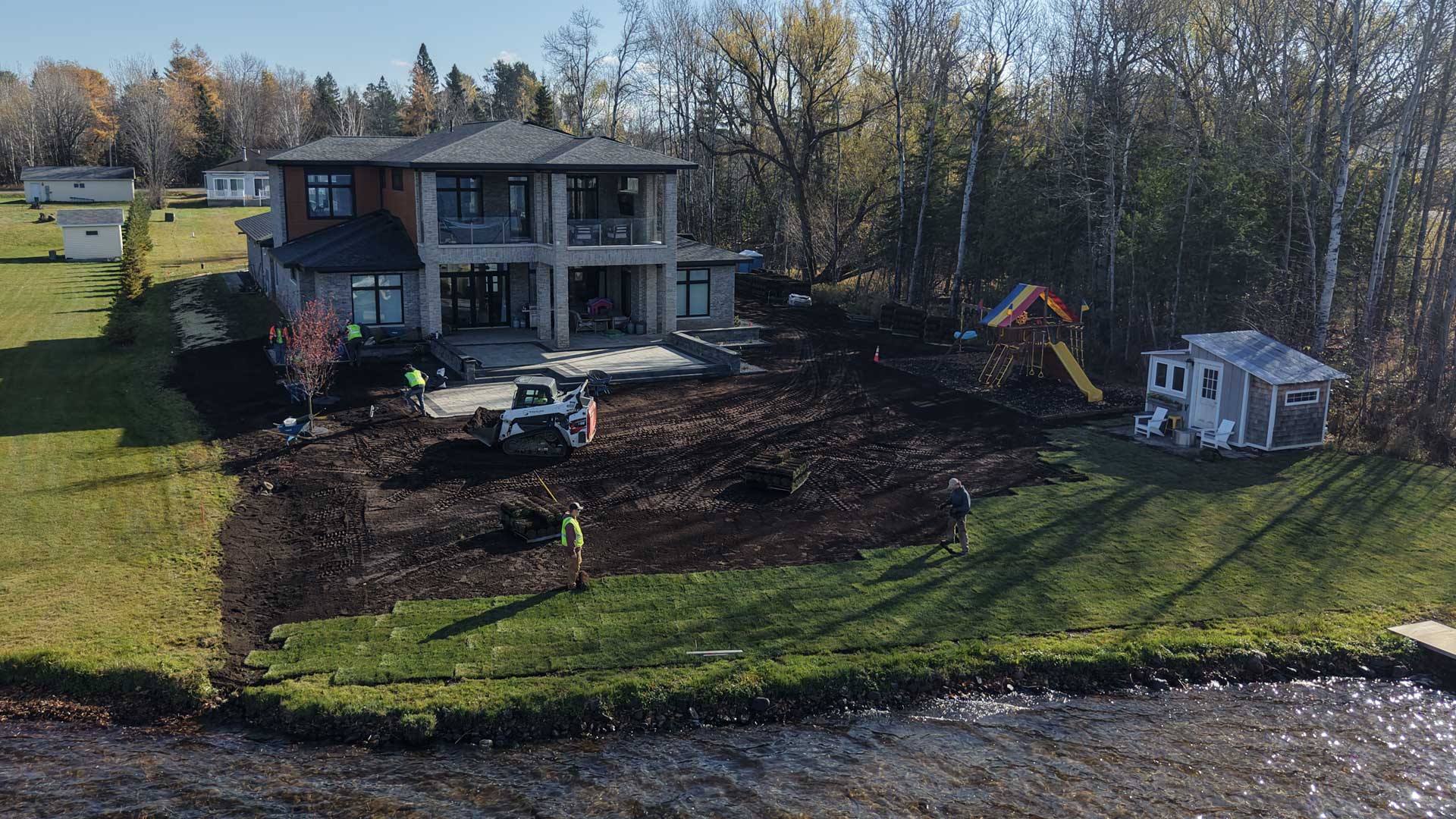
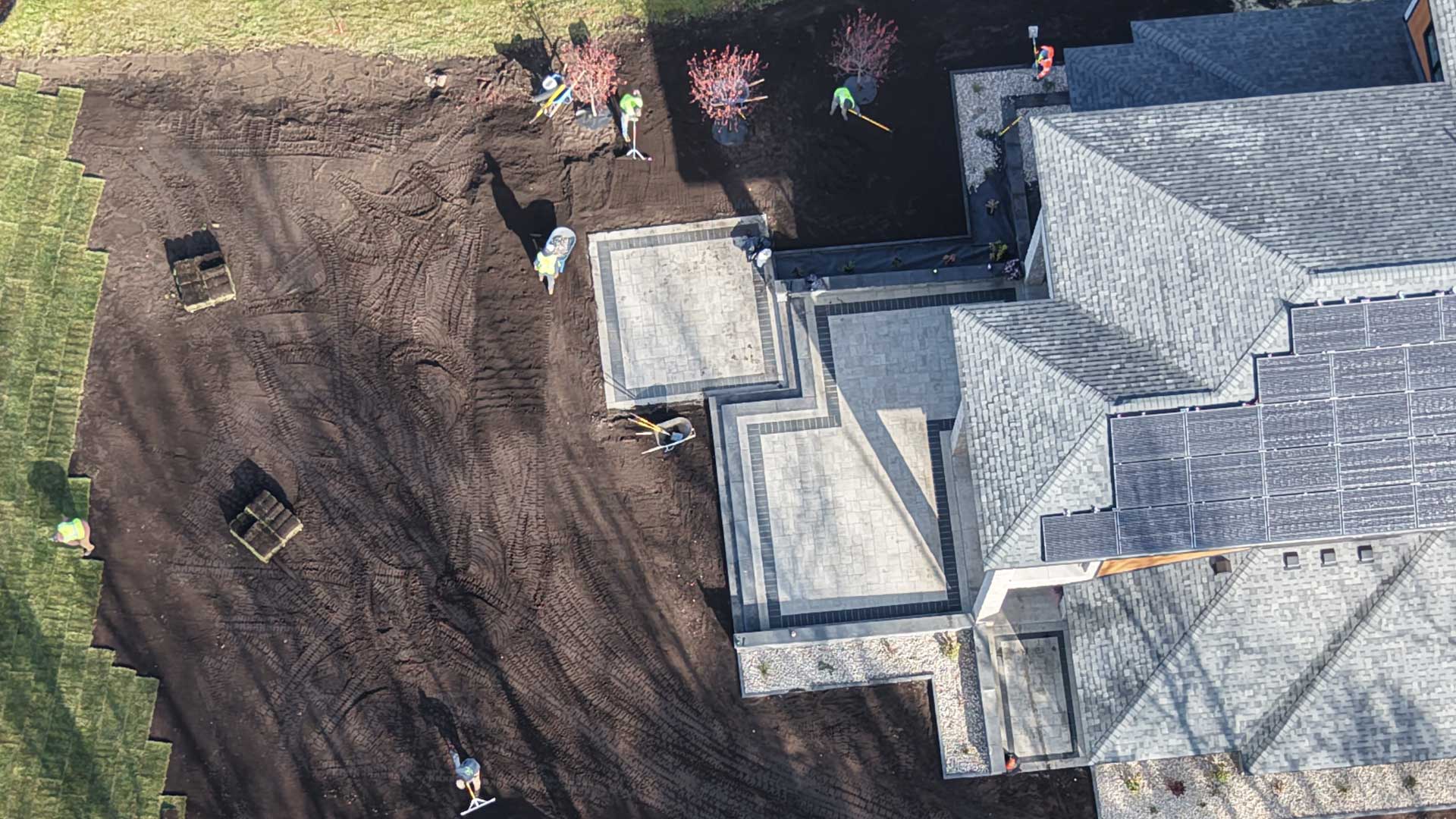
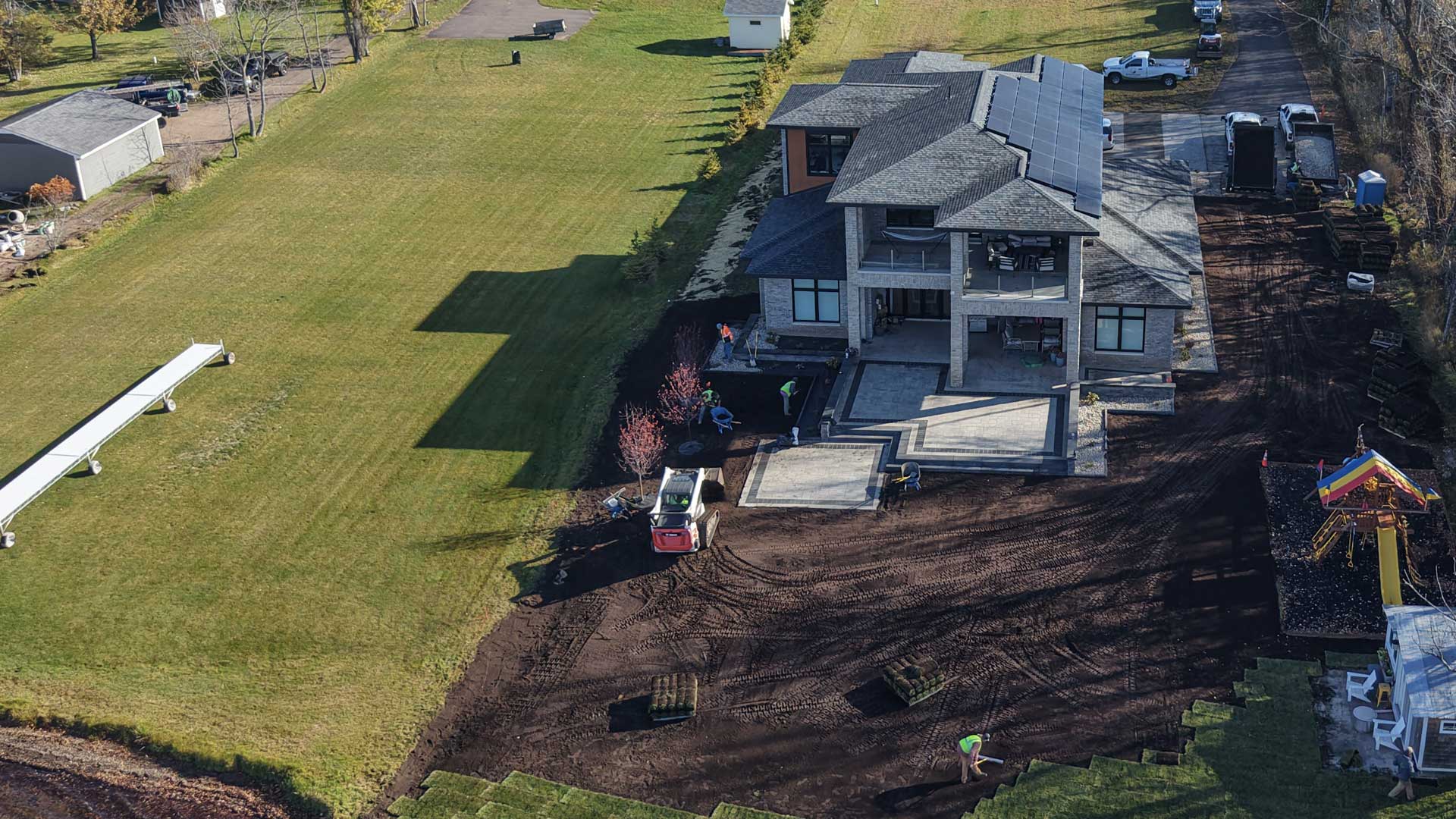

Sod installation delivers mature, field-grown grass with established roots, giving you a walkable, green lawn within days instead of months. We source regionally-adapted varieties that handle Duluth winters, clay soils, and lake-effect moisture for long-term success.
Our Sod Installation Process
Professional results through proven steps.
Site Prep: Remove old grass/weeds, rototill 4-6″, soil test/amend (lime, compost for clay)
Grading: Laser-level for drainage (1-2% slope away from foundation)
Soil Base: 1-2″ topsoil layer, starter fertilizer broadcast
Sod Laying: Staggered brick pattern, tight seams, no overlapping
Rolling: Heavy roller for root-soil contact
Watering: Deep soak immediately, daily x2 weeks
Full yards done in 1-2 days.
Ideal Timing
Best: Late summer/early fall (Aug-Sept)—cooler air, warm soil
Good: Spring (April-May) post-frost
Avoid: Mid-summer heat, winter freezes
Fall sod roots before dormancy for stronger green-up.
What is sod?
Sod is grass that’s already been grown and cared for on a farm, then cut into rolls and installed right on your property. It gives you an instant lawn without waiting for seed to grow in.
What are the benefits of sod vs. seeding?
Sod gives you a full, green lawn right away, so you can enjoy your yard sooner. It also helps prevent weeds and erosion from the start. Seeding can work too, but it takes more time, attention, and patience to get the same result.
When is the best time to install sod?
The best time to install sod is late summer or early fall. Cooler weather and steady moisture help it take root.
How long does sod take to root?
Most sod starts to take root within a couple of weeks. After about a month, it’s usually well on its way to becoming a stronger, established lawn you can enjoy.
How often should I water new sod?
New sod needs consistent watering to settle in. For the first couple of weeks, that usually means watering 2-3 times per day for 10-20 minutes to keep the soil moist. After that, we’ll guide you on how to taper back as your lawn gets established.
How can I tell if my sod needs water?
Your sod may need water if your footprint remains visible after watering, if the grass blades fold or curl, if your lawn develops a bluish-gray tint, or if the edges begin shrinking or separating.
Can I walk on new sod?
We recommend giving it a little time. Try to stay off your new lawn for the first couple of weeks so the roots can take hold. After that, light use is fine, but it’s best to ease into it.
Sod. The best way to get a new lawn almost instantly.
Thes video showcases the step-by-step process—rototilling, laser grading, tight seamless rolls—and highlights why sod wins for immediate usability, erosion control, and weed resistance on local properties.
Ready for Instant Green?
Fill out the form to schedule site eval + quote. Measure your area, note sun/shade/traffic, and we’ll spec exact materials and timing. Go from dirt to done faster than you think.
Sodding Gallery

Water Smarter, Not More: How to Support Your Yard in Peak Heat
When summer heat hits its peak, it’s natural to think your yard and garden beds need more water to keep up. But in reality, it
Spring Is Coming Fast — Is Your Lawn Ready, Northern Minnesota?
After a long Minnesota winter, the first warm days of spring bring a familiar itch to get outside — and a clear sign that lawn and